Most business pages aren't bad. They're inconsistent.
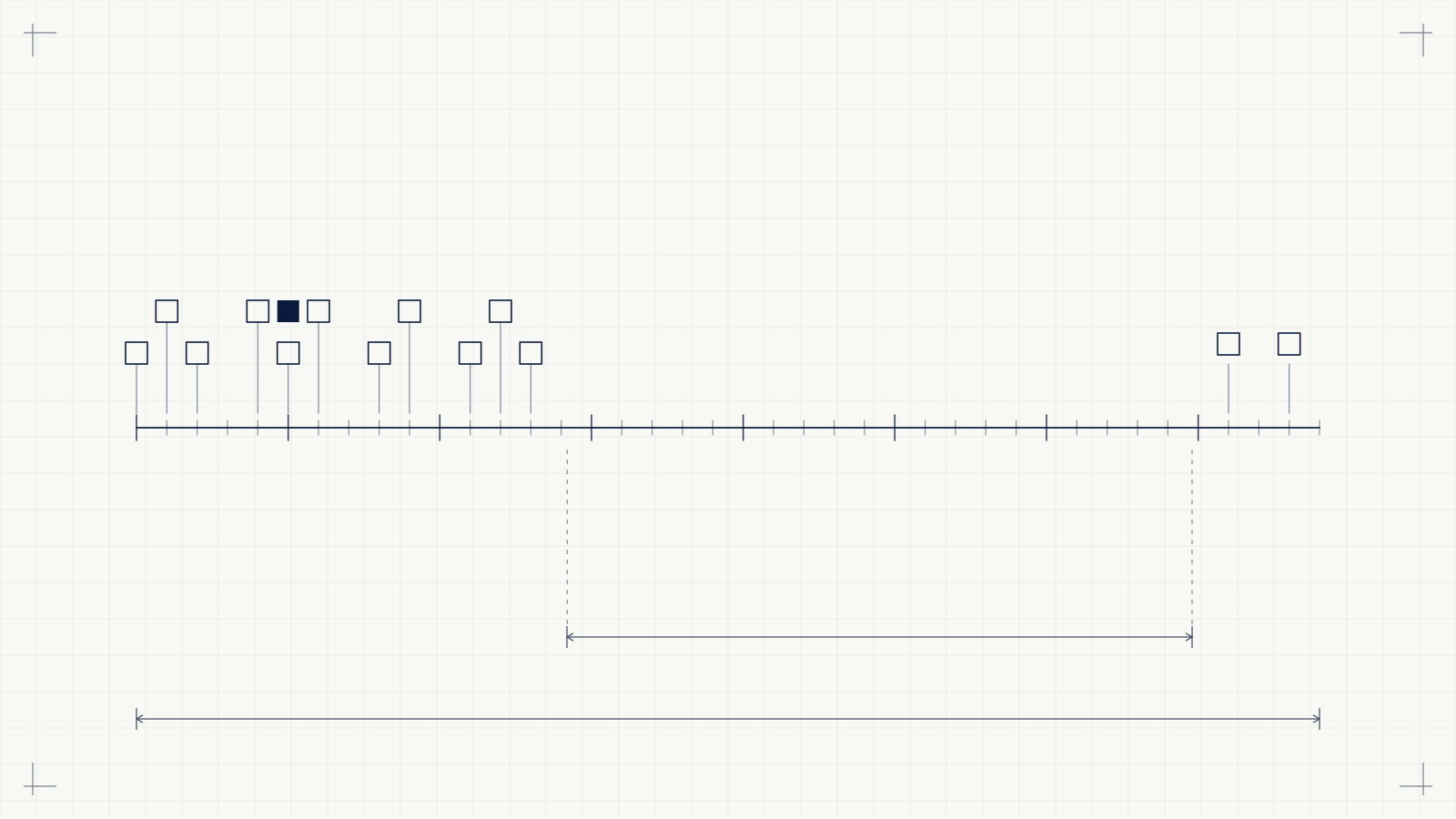
Three posts in one week, then nothing for a month. A promotion designed by one person, a photo posted by another, a reel made because a competitor made one. Each piece is fine on its own. Together they don't add up to anything.
And the pattern is almost always the same: the page goes quiet exactly when business is good. Which is backwards, because that's when a prospect checking you out has no way to tell the difference between "thriving and too busy to post" and "closed".
This is a practical answer to the question underneath that — what a B2B company should post when it has nothing to announce. If you are earlier than that and still deciding whether the channel is worth the effort, start with why a social media presence matters for a business.
Why it stops
It isn't laziness, and it usually isn't budget.
Social media is nobody's actual job. It gets done between other work, by whoever has time, with no plan beyond the next post. So the moment a real deadline arrives, it's the first thing to drop. Then a month passes, posting feels awkward, and the account quietly dies.
The fix isn't discipline. It's having decided in advance what goes out, so producing it doesn't require anyone to think of something.
The only structure you need
Pick three or four things your business can talk about credibly, forever. Those are your pillars. Everything you post belongs to one.
For most B2B companies the pillars look something like this:
- The problems your customers have. Not your services — the situations that make people go looking. The reconciliation that takes a week. The lead that died in a chat thread. These posts get saved and forwarded, because the reader recognises their own Tuesday.
- How things actually work. Explaining something in your field in plain language. You know things your customers don't, and explaining them is the cheapest authority available.
- Proof. Work you've done, products you run, problems you solved. Not "we're delighted to announce" — the problem, what you did, what changed.
- How you think. Your process, your standards, the things you refuse to do. This is the pillar most businesses skip and the one that separates you from competitors selling the same list of services.
Three or four pillars, repeated in recognisable formats, is the whole strategy. Recognition is what turns posting into a presence.

What to post when nothing is happening
The most common objection is "we don't have anything to post about." You do. It just doesn't look like news.
- A question a customer asked this week, and your answer
- A mistake that's common in your industry, and what to do instead
- Something you decided and why — a supplier, a policy, a process change
- A before-and-after of work you've done
- A short explanation of a term your customers hear but don't fully understand
- Something you disagree with that most of your industry believes
- A behind-the-scenes look at how something gets made or checked
None of that requires an announcement. All of it is more useful than a graphic saying "Happy Weekend".
What not to post
- Anything with an invented statistic. "90% of businesses fail at X." Nobody can source it, everyone can smell it, and it costs you the credibility the rest of the post was building.
- Fake testimonials or engagement bait. Both are obvious in a market this small.
- Generic motivational content. It says nothing about your business and attracts an audience that will never buy from you.
- Announcement-only feeds. Holidays, congratulations, office moves. Fine occasionally, useless as a diet.
How often is enough
Less than you think, done consistently.
Two good posts a week for a year beats seven posts a week for a month followed by silence. Pick a cadence you can maintain during your busiest month, not your quietest one. That's the real test — if the plan doesn't survive a busy period, it isn't a plan.
Batch the work. Producing eight posts in one sitting takes less time than producing eight posts across a month, and the quality stays more even.
How to measure it honestly
Views are the least useful number available. They tell you the algorithm showed your post to people, not that anyone cared.
Better signals:
- Saves and shares. Someone thought it was worth keeping or worth sending to a colleague. For B2B, shares are often how a decision-maker first hears about you.
- Profile visits and link clicks. Someone moved from watching to investigating.
- DMs and enquiries. The only metric that pays salaries.
A post with a few thousand views and three qualified DMs is worth more than one with a hundred thousand views and none. Judge accordingly, and be suspicious of anyone reporting only reach.
What we won't promise
We manage social media for businesses, and we don't promise follower counts, viral reach or a guaranteed number of enquiries.
Organic growth compounds slowly. Anyone guaranteeing otherwise is describing paid reach, or planning to buy you an audience that will never call. What we commit to is consistency, quality and honest monthly reporting — what moved, what didn't, and what changes next month.
We're doing this ourselves
Worth saying plainly: we built our own content system before selling it. Pillars, recurring formats, a monthly calendar approved in advance, production batched so quality stays even.
If you want to judge whether we can run yours, look at ours. That's a more useful test than a case study, and it's available to you right now.
The short version
Pick three or four things you can talk about forever. Turn them into formats people start to recognise. Decide the calendar in advance so producing it doesn't depend on inspiration. Post at a rate you can sustain in your busiest month.
And when the business gets busy, keep posting. That's precisely when someone is checking whether you're still around.