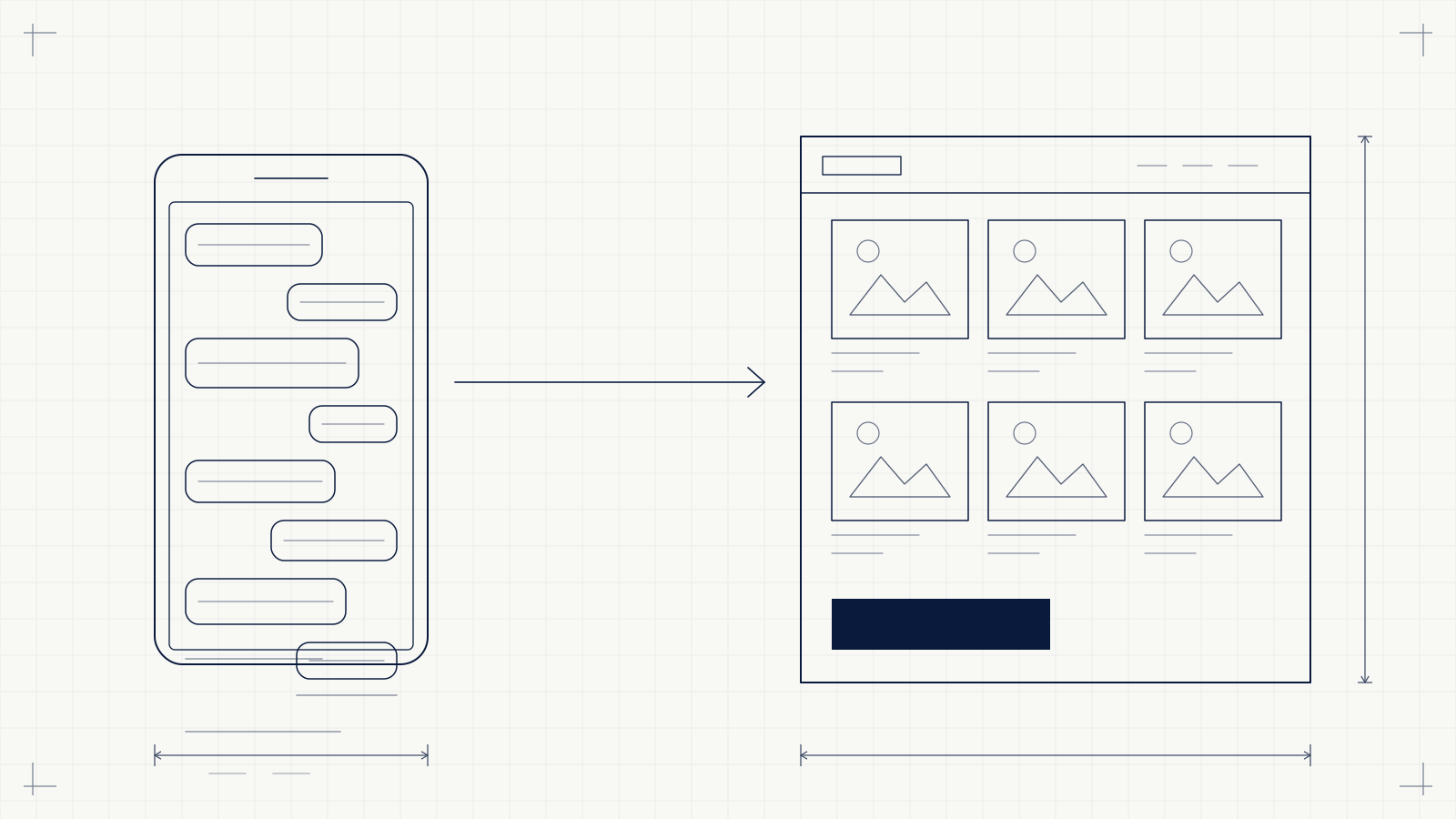
"Price?"
If that single word arrives in your WhatsApp more than a few times a day, this article is for you.
Most product businesses in this region already sell online. They just don't do it on a website. They do it through photos sent one at a time, Instagram DMs, a WhatsApp catalogue and a marketplace listing or two. For a while, that works surprisingly well. It's fast, personal and free.
Then the volume arrives, and the same system that got you here starts costing more than it earns. This is how to tell when you've reached that point, and what a proper store should actually fix.
Why chat selling works — until it doesn't
Selling through conversation has real strengths. Customers here are comfortable buying from a person. You can answer questions, build trust, negotiate and upsell in a way no checkout page can. For a new business, it's often exactly the right way to start.
The problem is that conversation doesn't scale. Every sale needs a human, every question needs an answer, and every order lives in a chat thread instead of a system. At twenty orders a week that's manageable. At two hundred, it's a full-time job — usually done by the owner, usually at 11pm.
Six signs you've outgrown it
- The same questions, all day. Price, sizes, colours, availability, delivery time. Your team answers them dozens of times a day, and most of those conversations never become orders.
- Your catalogue is a phone gallery. Customers ask what you have, someone sends photos one by one, then prices, then options. There's no way for a customer to simply browse.
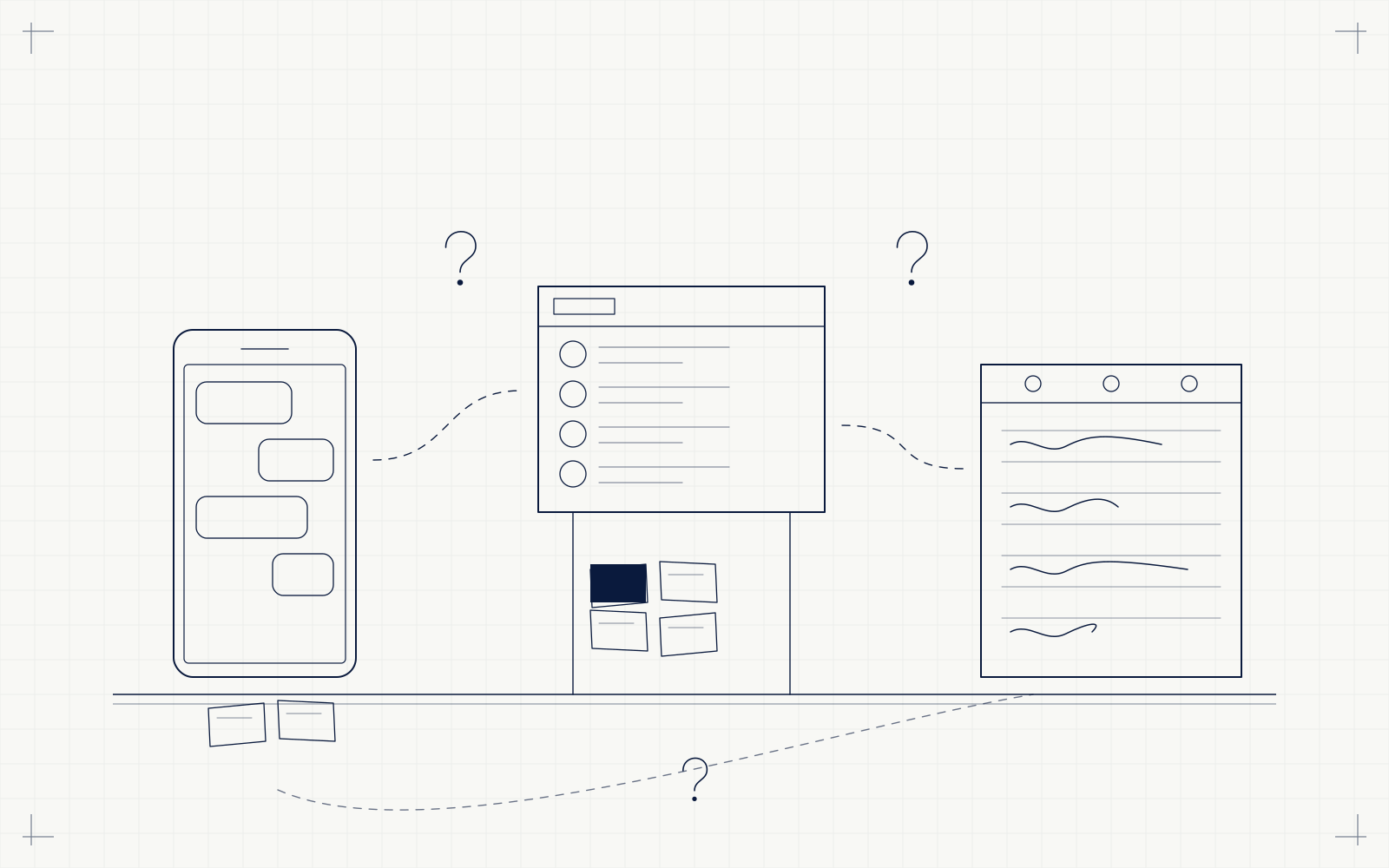
- Orders live in chat threads. Some in WhatsApp, some in DMs, some written down. Nobody is completely sure what's paid, what's shipped and what was promised to whom.
- You're selling what you don't have. The online conversation and the stockroom don't talk to each other, so you take an order, check the shelf, and apologise.
- You can't sell while you sleep. A customer ready to buy at midnight gets a reply the next morning. Some of them have already bought somewhere else.
- A marketplace owns your customers. Your repeat buyers belong to the platform, along with their data and your margin. The platform can change its commission, and you have nowhere else to send them.
If three or more of these are true, your sales channel has become your bottleneck.
What a proper store should actually fix
A good online store isn't a digital brochure. It's a system that removes specific work. Judge it on what it takes off your team's plate.
- It answers the questions before they're asked. Price, sizes, variants, stock and delivery time on every product page. The catalogue does the explaining your team currently does by hand.
- It takes the order without a conversation. Cart, address, payment, confirmation. No back-and-forth, no chasing details, no half-finished order sitting in a thread.
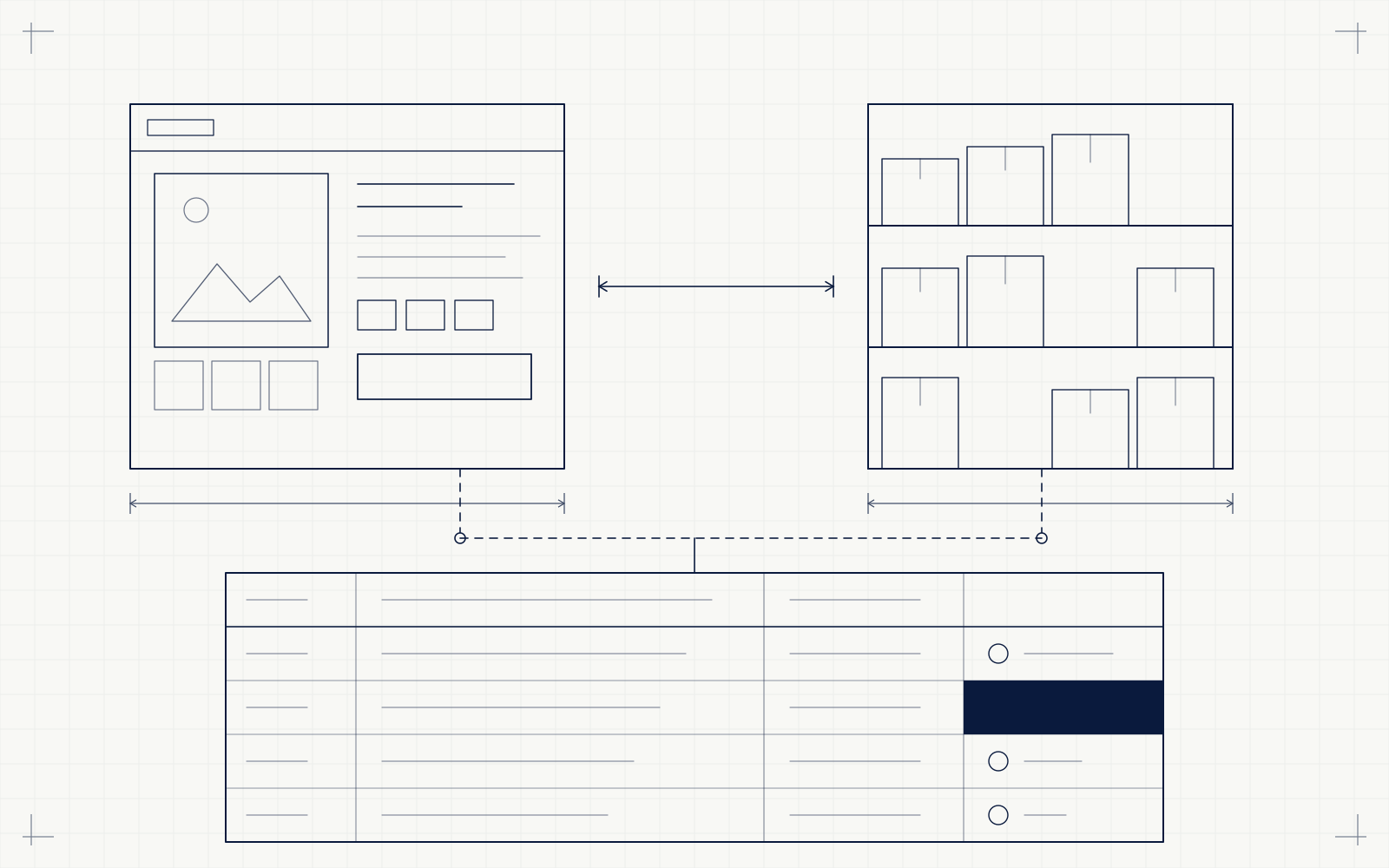
- It puts every order in one place. One admin panel showing what's paid, what's packed and what's shipped, instead of scrolling through three apps to find out.
- It knows your real stock. Connected to your inventory so the site and the shelf agree. This is the part most stores skip, and the part that stops the apologies.
- It gives you the customer. Their details, their order history, and permission to contact them again. On a marketplace, you rent that relationship. On your own store, you own it.
That last pair is what 88 Total and ThaiSuq were built around: a storefront that carries the catalogue, the cart and the customer account, rather than a brochure with a phone number on it.
Keep the conversation — just stop depending on it
The point isn't to kill WhatsApp. Customers here like being able to ask a person, and a good store keeps that door open.
The difference is where the conversation happens. A "chat with us" button on a product page means the customer already knows the price, the options and the availability. The conversation that follows is about whether to buy, not what you sell. That's a far better use of your team's time, and it closes more often.
Platform or custom?
This is where many businesses overspend, so it's worth being direct.
A well-configured platform build — Shopify and similar — is the right answer for most product businesses. It's faster to launch, well supported and handles payments, shipping and security properly. If your range is standard and your pricing is simple, start here.
A custom build earns its cost when your business doesn't fit the template: wholesale and retail pricing on the same product, complex variant matrices, made-to-order items, multi-branch stock, or deep integration with an ERP you already run.
The mistake is choosing custom because it sounds more serious, or choosing a platform and then fighting it for two years because your business was never going to fit. The decision should come from your catalogue and your margins, not from the agency's preference. If you are weighing what either route costs, we wrote that up for the UAE market.
What makes a store actually sell
A beautiful theme is the least important part. What decides whether a store works:
- Product photography that shows the item clearly, in consistent light, from more than one angle
- Honest descriptions that answer the questions your team currently answers in chat
- Clear delivery and returns terms, stated before checkout rather than discovered after it
- Local payment methods customers already trust
- Speed on a phone, because that's where almost all of your customers will be
- Arabic and English where your audience needs both
If the photography and descriptions aren't ready, fix those first. No design can rescue a catalogue nobody can understand.
How we approach it
We start with structure: how your range should be organised, categorised and filtered, before anything is designed. Then you get a written scope covering the platform, what gets built, what integrates with your stock, what it costs and how long it takes. You approve it before work starts.
We'll recommend a platform build when it fits and a custom one only when your business genuinely needs it. And because we build and run our own retail software, StockFlow, connecting your store to your real inventory is something we treat as core, not optional.
The short version
WhatsApp is a great way to start selling and a poor way to scale.
When the same questions fill your day, orders live in chat threads and you're selling stock you don't have, it's time for a store. Keep the conversation, give it a better starting point, and let the catalogue do the explaining.